- This event has passed.
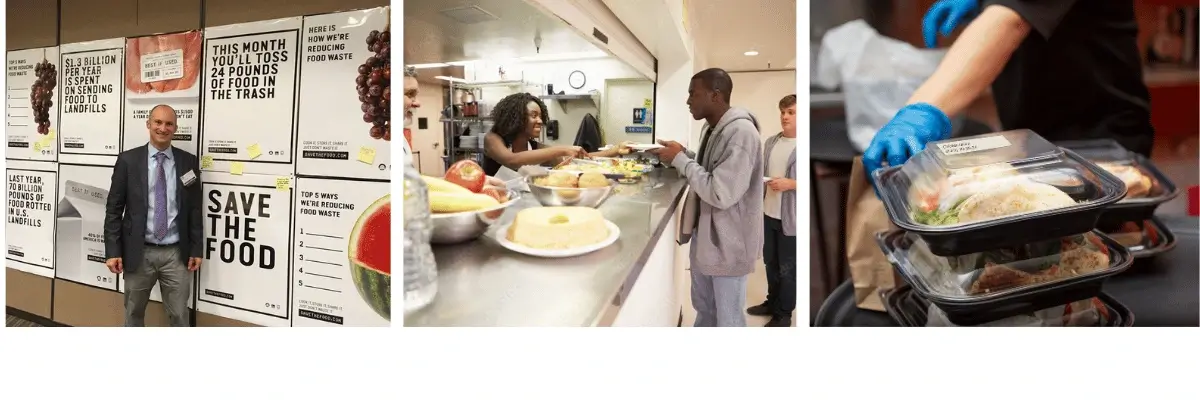
Food should feed people, not landfills. A deep dive into state-level organics waste bans – and how Massachusetts’ works
Location:
Virtual Event
Date:
September 26, 2025
Time:
12:00pm
- The MA Department of Environmental Protection on how the Massachusetts organics waste ban came to be, what has contributed to its success, and where it might be headed.
- CET on how their technical assistance and food waste reduction education for all types of food businesses supports successful implementation of waste bans and similar policies in multiple states
- Spoonfuls, New England’s largest food recovery organization, operating across Massachusetts. Spoonfuls champions the state’s ban as an effective tool to ensure that perfectly good food feeds people, and not landfills.
- NRDC (the Natural Resources Defense Council) will moderate the discussion and also offer insights on the potential impacts of state-level organic waste bans and other supportive food waste reduction policies at the federal, state, and local levels.


John Fischer
Deputy Division Director, Solid Waste, MA Department of Environmental Protection
John Fischer is Deputy Division Director for Solid Waste Materials Management at the Massachusetts Department of Environmental Protection (MassDEP). In this position, he oversees MassDEP’s development and implementation of the Solid Waste Master Plan, including MassDEP’s regulatory, permitting, compliance and grant and assistance programs to manage solid waste and advance waste reduction, recycling, and composting in Massachusetts. He has been with MassDEP since 1998. John holds a Bachelor’s degree in Human Ecology from Connecticut College and a Master’s in City Planning, focusing on Environmental Policy and Planning, from the Massachusetts Institute of Technology.

Lorenzo Macaluso
Chief Growth Officer, CET
Emily Gaylord is a senior leader at CET, where she leads strategy, communications, and partnerships that help scale climate solutions and maximize their impact. By shaping CET’s voice and driving outreach strategies, Emily has strengthened the organization’s ability to inspire over 75,000 people annually—from homeowners to small businesses to community institutions—to take practical action on climate. Her work has supported programs that prevented nearly 370,000 tons of CO₂ emissions in 2024 alone, ensuring that CET’s proven solutions deliver results where they matter most.
With more than a decade of experience in climate communications, Emily specializes in translating climate science into action by designing strategies that scale practical solutions, from decarbonizing small businesses and farms to reducing wasted food and advancing equitable access to energy efficiency.
Emily believes that effective communication is a climate solution in itself—essential for mobilizing action, building partnerships, and driving lasting change.
Liz Miller
Senior Community Relations Manager, Spoonfuls
Liz Moniz Miller is the Senior Community Relations Manager at Spoonfuls, where she helps drive impactful food waste reduction and recovery efforts across Massachusetts. In her role, she focuses on public and legislative affairs, community engagement, and building strategic partnerships that advance the organization’s mission. Liz fosters strong relationships with retail and industry partners, nonprofits, government agencies, and legislators to ensure sustainable and equitable food systems.
With over 15 years of experience in food systems and public affairs, Liz brings expertise in strategic program development and leveraging partnerships for meaningful impact. She is deeply passionate about connecting communities with actionable solutions to address sustainability, food insecurity, and equity—ensuring that diverse voices and needs are part of lasting change.


September 26, 2025 @ 12:00 pm – 1:00 pm EDT