Solutions at Scale:Wasted Food Solutions Training Program
Supported by the ReFED Catalytic Grant, CET developed a scalable training model that helps trusted regional organizations launch food waste reduction programs in their own communities.

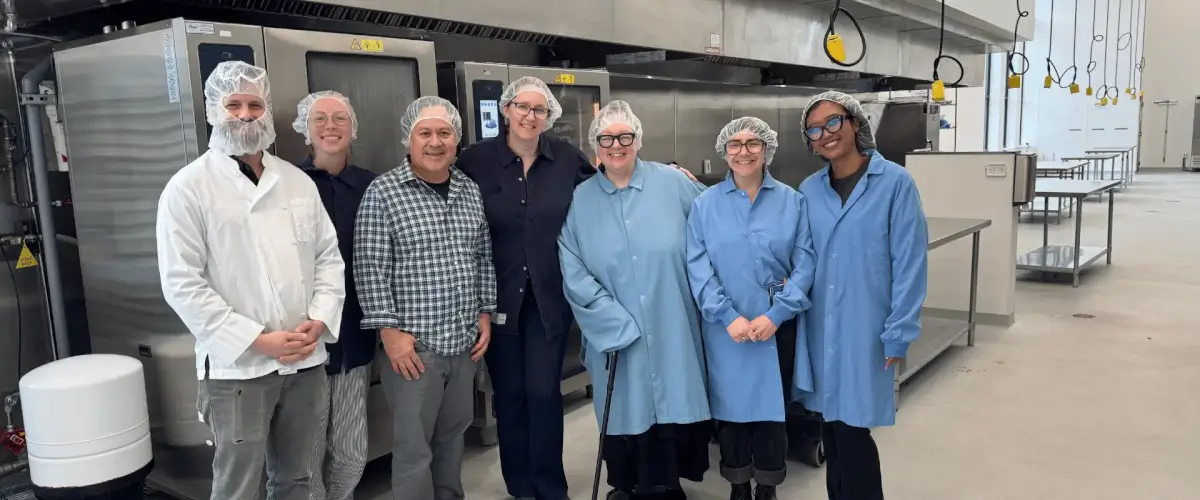
Communities, businesses, and local leaders are ready to reduce wasted food. The challenge is scaling trusted, locally rooted support across the country. Drawing on decades of technical assistance experience, CET created a national training program to support lasting local impact.
Four principles shaped the national training model.
Through the pilot, participating organizations translated training into real-world action, helping restaurants reduce wasted food and avoid emissions.
Trainee Organizations
Communities Received Hands-On Training
Restaurants Received Technical Assistance
Tons of Food Waste Composted, Donated, or Prevented Per Year
A guided learning model that moves organizations from readiness to real-world implementation.
Onboarding
Each participant begins with an onboarding call with CET trainers to define goals, understand current readiness, and review the training roadmap.

Training
Virtual sessions give participants the tools and frameworks needed to design local programs.
Practice
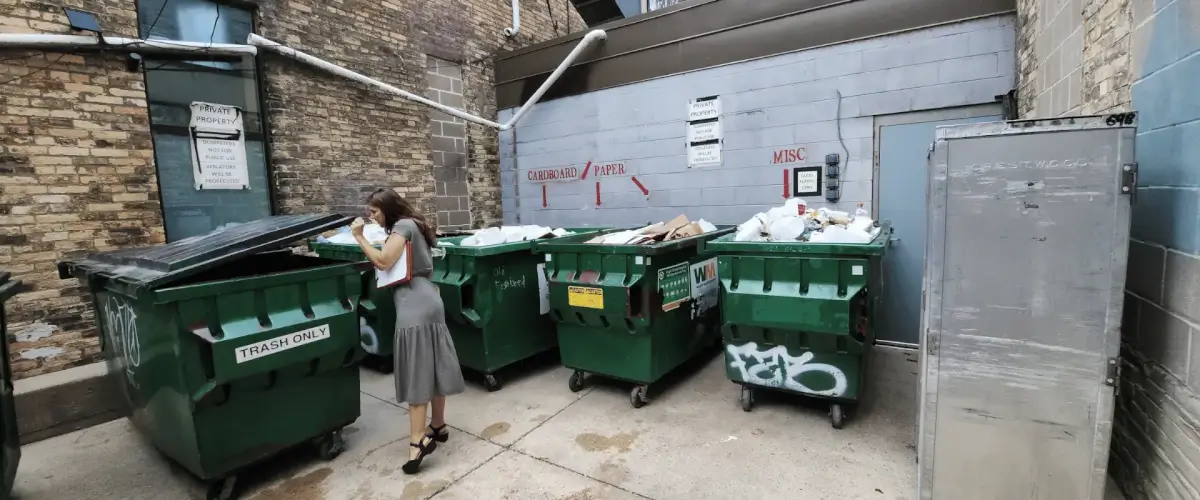
Participants plan site visits, recruit restaurants, and practice delivering technical assistance.

Reflection & Implementation
Participants document outcomes, compile materials, and outline next steps for continued impact.
01 · Onboarding
Build Alignment Before Training Begins
Each participant begins with an onboarding call with CET trainers to define goals, understand current readiness, and review the training roadmap.
Foundational resources cover:
- Food waste basics
- Source reduction strategies
- Food donation best practices
- Food separation guidance
- EPA Wasted Food Scale fundamentals
This creates a shared baseline for all participants.

Training Resource
Download the Training Information
Learn more about the Wasted Food Solutions Training Program
Download PDF02 · Training
Session 1: Wasted Food Deep Dive & Program Design
Build the Foundation for Local Programs
The first live session provides a framework for participants to build their own local program
Topics Include:
- Food waste reduction strategies
- Example case studies
- Technical assistance program design
- Business outreach strategies
- Recruitment planning
Session 2: On-Site Assesments & Recommendations
Prepare for Field Delivery
The second live session prepares participants for field delivery; they leave ready to put technical assistance into practice.
Participants learn to:
- Conduct on-site waste assessments
- Develop customized recommendation reports
- Integrate cost analysis into planning
Homework: Landscape Analysis & Trash Math
Apply Learning to Local Context
Between virtual sessions, participants complete two structured activities: a Wasted Food Landscape Analysis of their local community and a Trash Math cost analysis exercise. These assignments ground participants in the realities of their local context and prepare them for implementation planning.
Office Hours - Ongoing Support Between Sessions
03 · Practice
Prepare for Real-World Implementation
Following the virtual training, participants work with program coaches to plan for the on-site phase of training, drawing on their landscape analysis and organizational goals to identify target businesses.
Trainee organizations identify 10-20 restaurants in their area as sites for training, and schedule site visits with each. Coaching sessions with CET help organizations refine recruitment strategies, identify community partners, and prepare for on-site delivery
Participants work with CET coaches to:
- Identify target businesses
- Select 10–20 restaurant sites
- Refine recruitment strategies
- Identify community partners
- Prepare for on-site delivery
On-Site Technical Assistance Training
Move from Planning to Action
Alongside CET, participating organizations deliver technical assistance to local businesses, first shadowing, then taking the lead to guide businesses toward wasted food solutions. This is where trainees move from planning to action.
On-site Training 1: Observe the Model in Practice
After the visit, CET shares a custom recommendation report with both the restaurant and trainee, and supports additional follow-up conversations.
On-site Training 2: Lead with Coaching Support
Following the site visits, the trainee creates their own recommendation report for each restaurant, and reviews next steps with business owners.
04 · Reflection & Implementation
Sustain Momentum Beyond Training
With continued mentorship from CET coaches, participants document outcomes, compile materials, and outline next steps for their organization.
This reflection supports impact measurement and helps trainees make the case for continued or expanded investment in local technical assistance.
Participants finalize:
- Program outcomes
- Training materials
- Next-step plans
- Case for future investment
The pilot phase demonstrated significant national interest in the Wasted Food Solutions (WFS) Training Program while helping CET refine the model for future expansion.
May-Sept 2024
Oct-Nov 2024
Dec 2024-Jan 2025
Feb-March 2025
June 2025-Jan 2026

Pilot Development
CET first deployed a train-the-trainer model in Washington, D.C. with the Latino Economic Development Corporation (LEDC) in 2024. LEDC’s business coaches adopted their learnings into a restaurant owner training series that helps food businesses improve waste reduction practices. This program includes a module on the financial and environmental benefits of addressing wasted food in emerging businesses, drawn from CET’s resource materials.
To design the WFS Training Pilot, CET gathered input from the NRDC, CalRecycle, LEDC, and City of Baltimore. These collaborators helped prioritize training topics, refine outreach language, and provide recruitment support.


Recruitment focused on groups already connected
to restaurants, business support, sustainability,
or food waste regulations.
The team also targeted areas with new or updated wasted food regulations; businesses in these areas are more likely to be motivated to implement food waste reduction strategies, and local officials are eager to offer proactive support alongside enforcement action.
Community Readiness
Many economic development agencies have mechanisms to support the business community; similarly, Departments of Health already provide health code compliance assistance and have standing relationships with restaurants in their area.
The CET team developed a diversified approach to drive interest in the WFS Training Pilot.
Selecting a Strong First Cohort
In order to ensure that prospective trainees were prepared to take full advantage of the training, the team developed criteria for accepting entities into the cohort:
Three regional cohorts put the WFS Training Program into practice, adapting the model to local policies, infrastructure, and restaurant needs.
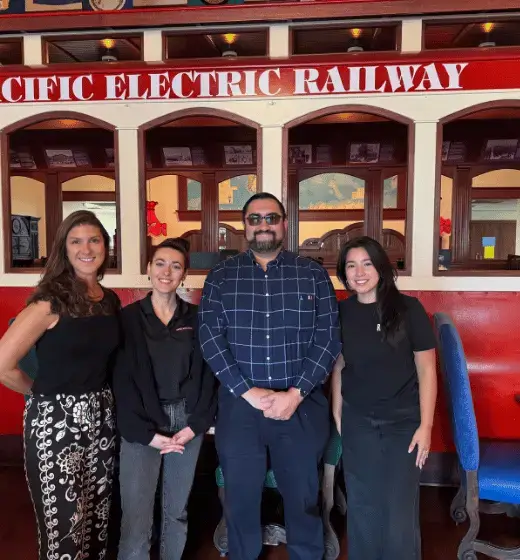
City of Gresham

Department of Environmental Services - Solid Waste & Sustainability
Supported multilingual restaurant outreach, technical assistance tools, and practical food waste reduction strategies for local businesses.
- Spanish-language resources
- Business recommendation templates
- Existing program expansion & refinement
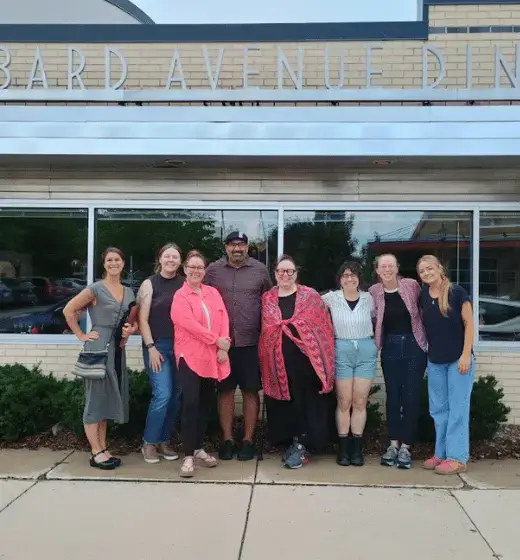
Milwaukee & Madison


Milwaukee, Dane County, & Sustain Dane
Built a regional collaboration model connecting technical assistance, hauling expertise, food rescue, and restaurant outreach.
- Regional partnership model
- Funding secured after pilot
- Restaurant operational wins

San Gabriel Valley

Council of Governments, SCS Engineers & ReCREATE
Integrated prevention, donation, and diversion strategies into business inspections and food recovery support.
- SB 1383 support tools
- Easy-to-use recommendation reports
- Expanded recovery systems
Oregon Cohort
City of Gresham
Overview
The City of Gresham worked with CET to fine tune a Technical Assistance program and recommendation template for businesses, while also developing Spanish-language resources for Gresham’s multilingual restaurant sector.
Challenges
Increased ICE action in the Portland Metro area made restaurant engagement more difficult, with businesses facing staff losses, reduced business, and hesitation around outside visitors.
Key Successes
CET supported Gresham in shifting from food scrap separation toward food waste reduction, helping incorporate practical recommendations into local restaurant support.
Assistance in Action
- Nicholas Restaurant explored smaller pita portions for smaller tables, with an estimated 1-ton annual reduction.
- Supermercados Mexico corrected its compostable bag program, diverting approximately 42 tons annually.
- Chain restaurants continued food scrap diversion while working within corporate standards.
Wisconsin Cohort
Milwaukee & Madison
Overview
The City of Milwaukee Environmental Collaboration Office, Dane County Department of Waste & Renewables, and Sustain Dane came together to implement wasted food reduction, donation, and diversion strategies.
Challenges
Food scrap hauling costs, limited hauling infrastructure, and the absence of commercial organics waste policy created barriers for restaurant participation.
Key Successes
The pilot created a concrete platform for collaboration. Dane County contributed hauling expertise, Sustain Dane brought food rescue knowledge, and Milwaukee served as a central hub for restaurant connections.
Following the pilot, collaborators secured additional funding from the Wisconsin Department of Natural Resources to expand technical assistance work in the region.
Assistance in Action
- Kuumba added reusable cup discounts and expanded food scrap collection to special events.
- Hubbard Avenue Diner used Too Good To Go to prevent roughly 700 pounds of food waste annually.
- Food Fight Restaurant Group will pursue technical assistance for all 18 of their restaurants.
California Cohort
San Gabriel Valley
Overview
San Gabriel Valley Council of Governments, SCS Engineers, and ReCREATE Waste Collaborative partnered to support restaurants with wasted food prevention, donation, and diversion under California’s food recovery requirements.
Challenges
Many restaurants were aware of SB 1383 but less familiar with other recycling requirements. Smaller eateries also faced barriers to food donation due to limited storage and pick-up quantity requirements.
Key Successes
The cohort developed a closer partnership and integrated wasted food recommendations into inspections.
Assistance in Action
- The Old Spaghetti Factory is expanding surplus food donation across nine locations, totaling 8 tons of edible food recovered per year.
- Villa Catrina now composts more than 3 tons of organic material annually and recycles 8 tons of cardboard.
- The Cheesecake Factory expanded food scrap collection to front-of-house and is diverting 68 tons annually.
- Sakura Japanese Steak & Seafood House added dishwashing station food capture, diverting 3 additional tons per year.
- Several smaller restaurants began offering surplus whole meals and individual food items/ingredients to employees.
By the Numbers
Pilot Impact at a Glance
As part of the Wasted Food Solutions Training Pilot, participating communities helped restaurants reduce, donate, and divert wasted food.
Communities
Restaurants received technical assistance
Tons of food waste composted, donated, or prevented per year
Tons of carbon emissions avoided per year
Food Waste Diversion Breakdown
The majority of documented food waste diversion came from composting, with food donation and prevention also contributing to the total impact.
The pilot helped CET refine the Wasted Food Solutions (WFS) Training Program and better understand what regional organizations need to successfully lead food waste reduction work in their own communities.
Demand for Practical Solutions Is Strong
The pilot had 75% more applicants than CET could accommodate, and many different types of organizations wanted to participate. The volume of interest, along with the quality of applicants, confirmed the need this program was designed to address.
Regional organizations want to lead food waste reduction work locally, and they are actively looking for structured support, tools, and proven guidance.

Foundational Knowledge Differs Widely
Some trainees entered the program with a strong understanding of wasted food sources, drivers, and reduction strategies. Others were starting from square one.
Following the pilot, CET updated training materials to separate introductory content into its own module and quiz. This allows more experienced participants to move faster, while ensuring newer participants still receive the foundation they need.
In later one-on-one trainings, CET also introduced informal gap assessments to better tailor learning plans.
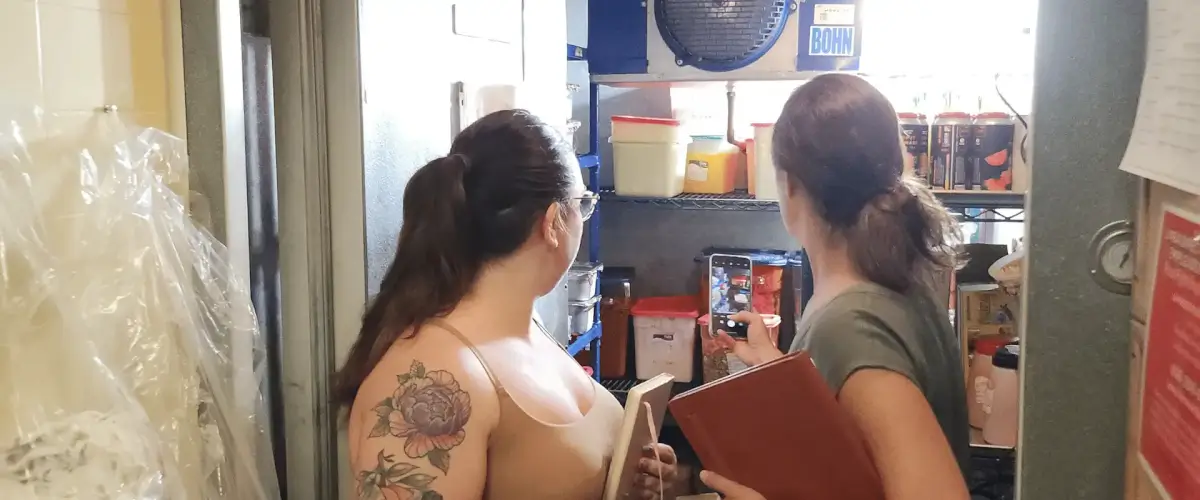
Every Collaboration Strengthens the Network
One of the most valuable outcomes of the pilot was the new relationships formed between CET, trainees, and collaborating organizations.
Working together over several months helped build trust and long-term partnerships that extend beyond the training itself. Participants also benefited from peer learning, sharing strategies, troubleshooting challenges, and building regional relationships.
Future networking platforms or check-ins could help strengthen these connections even further.
Outreach Support Is Critical
For many on-site participants, recruiting restaurants to receive technical assistance was more difficult than expected.
In response, CET outreach staff held strategy meetings with participants, developed outreach plans, and shared templates for emails and communications. Participants also used their Landscape Analysis exercises to identify local partners who could support recruitment.
Future trainees will benefit from more dedicated outreach guidance and mentorship earlier in the program.

Context Is Key
CET’s role in the program is not only trainer, but mentor and thought partner.
Regular calls and check-ins helped participants adapt CET’s foundational best practices to fit their own community context, staffing capacity, and workflows.
For example, San Gabriel Valley staff initially struggled to confirm site visits with restaurants. Rather than forcing CET’s original intake model, the team adapted the program to fit the organization’s existing drop-in service model.
This flexibility helped participants successfully integrate food waste reduction into their existing work.

Expanding Access Matters
In the future, CET hopes to expand access to the program by offering training in Spanish and other languages.
This would help equip leaders of all backgrounds to take action in addressing wasted food, while strengthening cultural literacy and collaboration across communities.
CET is applying lessons from the pilot to expand the WFS Training Program and support more communities.