Resource

Food Scrap Diversion

Food scrap collection is successful when it’s quick and easy for chefs and other kitchen staff. Scraps can be collected for animal feed, composting, or anaerobic digestion.

CET logo

Dish Return Areas

Designated containers make it easier for staff and customers to separate food scraps from trash and recycling.

Dish return areas can be equipped with a designated food scrap container for food leftover on customers’ plates.
A separate trash container should be installed at this station for incidental disposables such as ketchup packets, plastic straws, and other packaging. A recycling bin can be placed here if recyclable items are generated in this area.
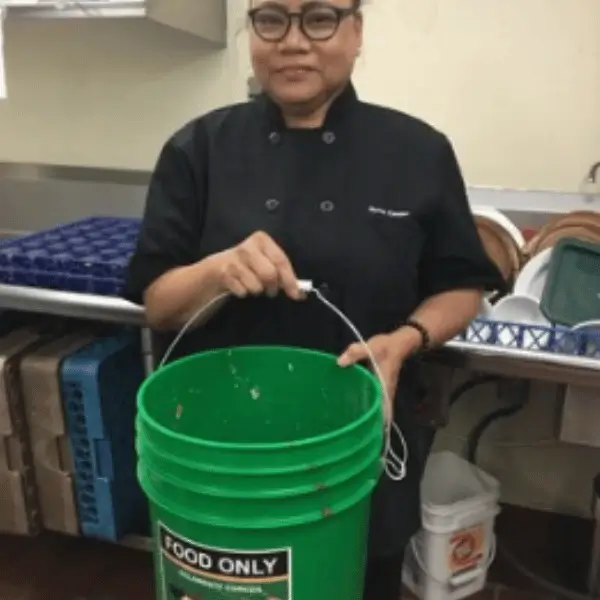
Restaurant employee holding a bucket for scrap separation in BOH

Prep Stations

Collect trimmings where food preparation takes place.

Prep stations, where produce is cut, can be equipped with tabletop containers to collect trimmings.
Depending on space availability, a cart could be centrally located in the preparation area for consolidating from the smaller containers.A separate trash container should be installed at this station for incidental disposables such as ketchup packets, plastic straws, and other packaging. A recycling bin can be placed here if recyclable items are generated in this area.
Good Housekeeping

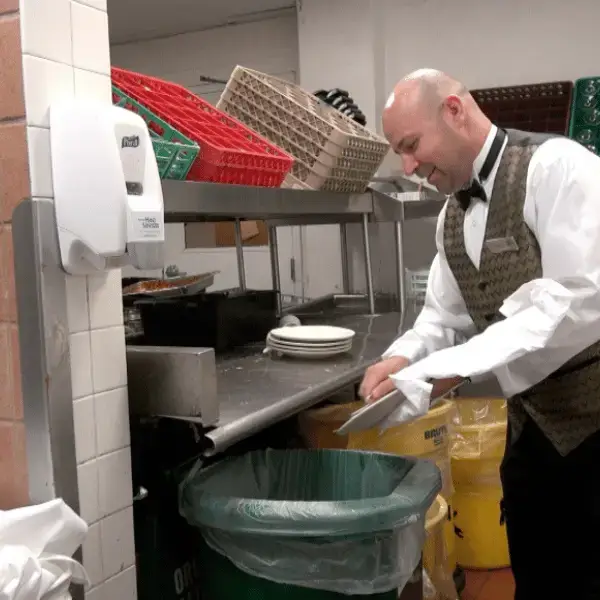
Clean and consistent collection practices help keep food scrap stations safe, efficient, and easier to maintain.

Good housekeeping includes removing food scraps at the same frequency as trash and cleaning up spills of food scraps inside or outside as soon as possible. To help keep the cart cleaner contact your hauler to learn more about their practices for using liners.
Sorting Stations

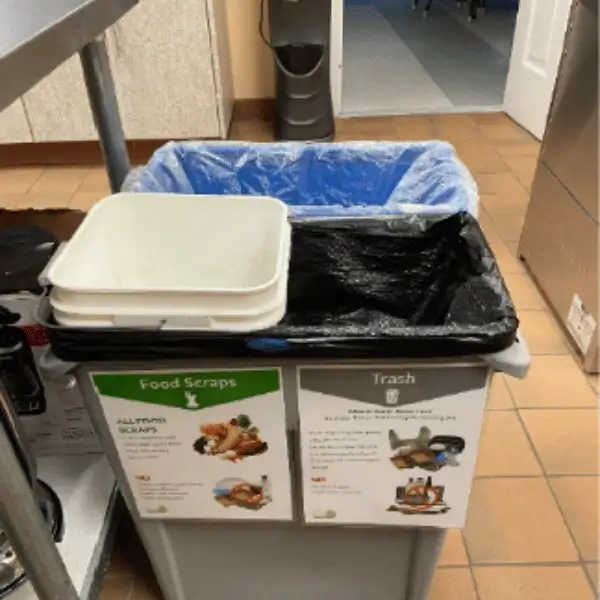
Place collection bins together and clearly identify what belongs in each container.

Sorting stations are centrally located bins for food scraps, trash, and recycling. For convenient and efficient sorting, co-locate and label bins with what can and cannot be placed in the bin.
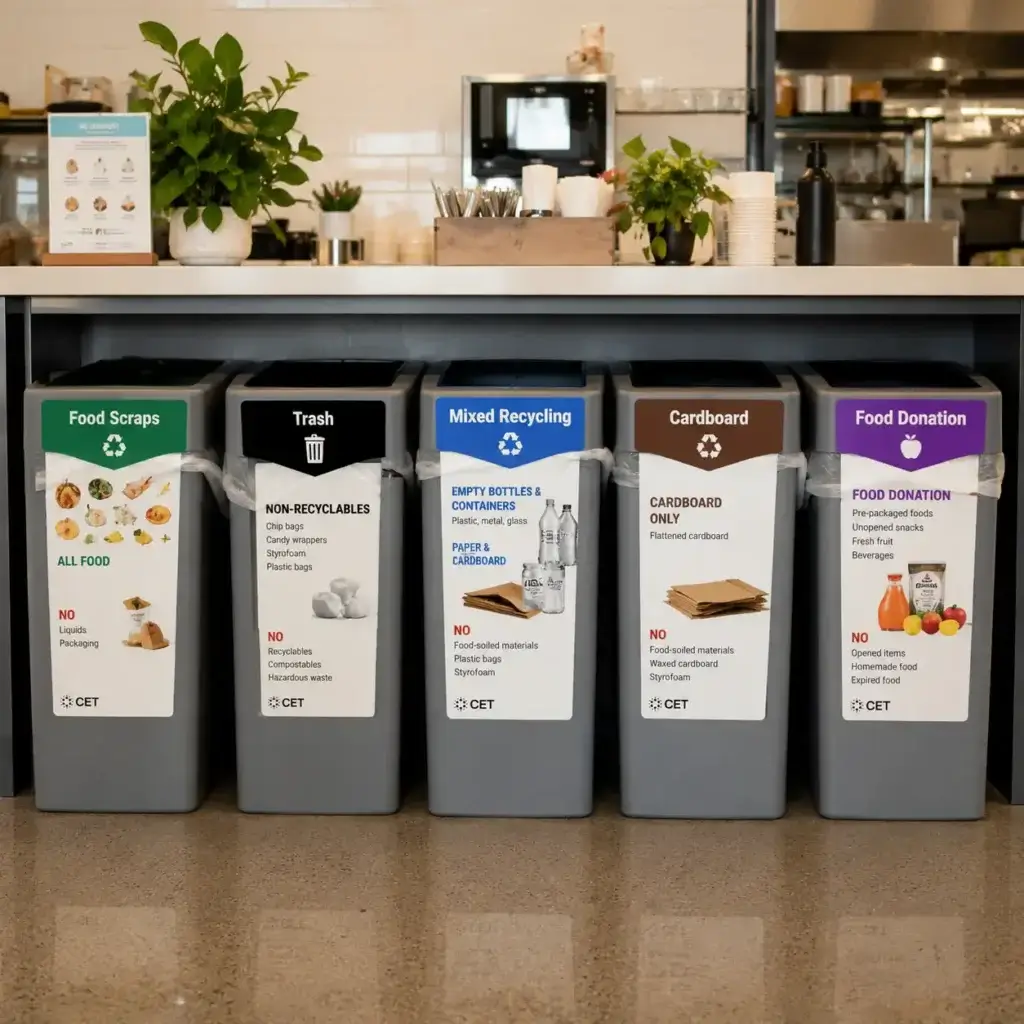
Waste bin signage in a cafeteria showing labeled bins for food scraps, trash, mixed recycling, cardboard, and food donation

Food Scrap Separation Resources

Use these resources to prepare staff and coordinate food scrap collection with haulers and local partners.

Guidance

Hauler Contracting Guidance

Hauler Contracting Guidance may help you prepare for conversations with haulers.

Guidance Document

Wasted Food Separation Made Easy

Training Video

Food Scrap Separation Training

Food Waste Wasted Food

Why do we say “Wasted Food” instead of “Food Waste”?

Much of what’s thrown away isn’t truly waste. Often, it’s edible food that could be donated, or materials that can be redirected to better uses like animal feed, composting, or anaerobic digestion.

join our work, Talk to us!

We’re excited to help you decarbonize with energy and waste solutions.

get resilient content!

Get the month scoop on climate & sustainability! - unsubscribe anytime!

SUPPORT

Sustainable Partners
Toolkits
Sectors
Programs

GET INVOLVED

Donate
Careers
About Us
Board

CONNECT

Contact Us
Press + Media
Hotline
Accesibility Statement
Scroll to Top