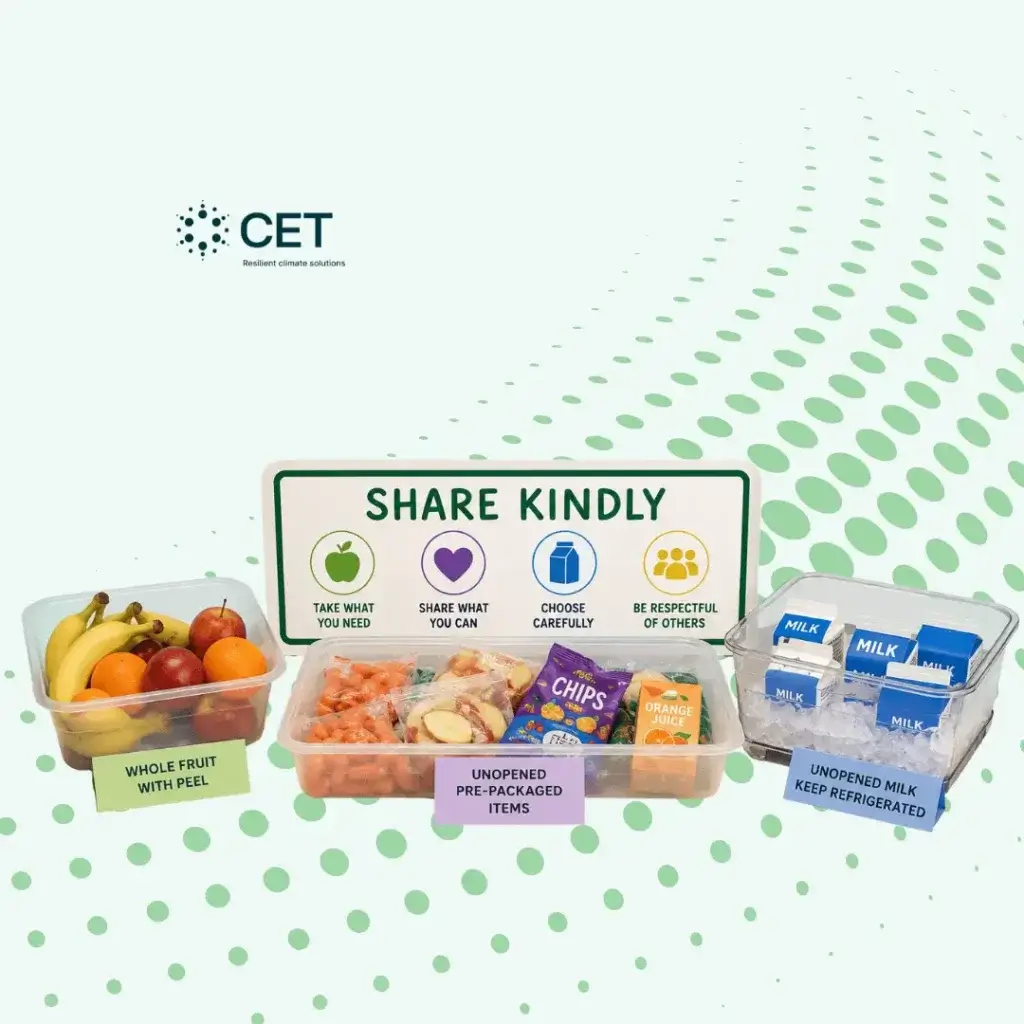
A share table is an area where students can leave unopened cafeteria-provided food items for other students to take.
Places to hold the food include:
Bowls
Bus bins
Coolers with ice
Refrigerators
Share tables may be located:
Near condiments and utensils
After the register
Near waste sorting stations
Share tables need to be monitored/managed to ensure only acceptable items are left, and determine how they will be handled at the end of the lunch periods.
Why Is There Food to Share?
School meal programs are designed to provide nutritious meals that help students stay healthy and ready to learn.
Under USDA meal requirements:
Lunch
Students are offered components including:
Dairy
Grain
Protein
Fruit
Vegetables
Students must select at least three items.
Breakfast
Students choose from components such as:
Fruits and vegetables
Grains
Meat/meat alternates
Milk
Students must select at least three food items, including at least ½ cup of fruits or vegetables.
As a result, students sometimes take items they do not intend to eat. Rather than throwing away unopened items, share tables allow those foods to be safely redistributed.
Allowable Foods
Examples of foods commonly allowed on share tables include:
Examples of places to hold the food include:
Unopened pre-packaged cafeteria foods
Whole fruit with a peel
Unopened milk stored at 41°F or below in an approved cooling bin
Unallowable Foods
Items generally not allowed include:
Food brought from home
Opened food items
Unpackaged foods
Foods that can be opened and resealed
Perishable foods without temperature control
Schools should always follow local health department requirements.
How to Start a Share Table Program
Schools should:
Obtain local approval when required
Develop written operating procedures
Align procedures with food safety plans
Train staff and volunteers
Educate students and families
Post clear share table signage
Monitor operations regularly
Best Practices for Success
Consider these strategies:
Place the share table within the natural cafeteria flow.
Assign a staff member or trained volunteer to monitor the area.
Involve students as share table helpers.
Use collected data to support food waste reduction efforts.
Evaluate procedures regularly.
Establish a plan for handling leftover items at the end of meal service.
In some communities, surplus food may also be donated to eligible organizations in accordance with local regulations.
Food Safety Considerations
Successful share table programs depend on proper food safety procedures.
Important practices include:
Maintaining temperature control
Monitoring and documenting food handling
Following HACCP procedures
Preventing contamination
Tracking redistributed foods
Keeping share table items separate from unserved food inventory
Schools should work closely with local health departments and school nurses when developing procedures.
State-Specific Share Table Resources
Download the guide that best matches your location to access state-specific additional resources.
Food Waste→Wasted Food
Why do we say “Wasted Food” instead of “Food Waste”?
Much of what’s thrown away isn’t truly waste. Often, it’s edible food that could be donated, or materials that can be redirected to better uses like animal feed, composting, or anaerobic digestion.
Get Free Assistance to Reduce Wasted Food
Looking to cut down on wasted food and improve your sustainability efforts? CET offers free assistance to help businesses, schools, and institutions implement effective waste reduction programs.