Our Approach: Personal and Practical
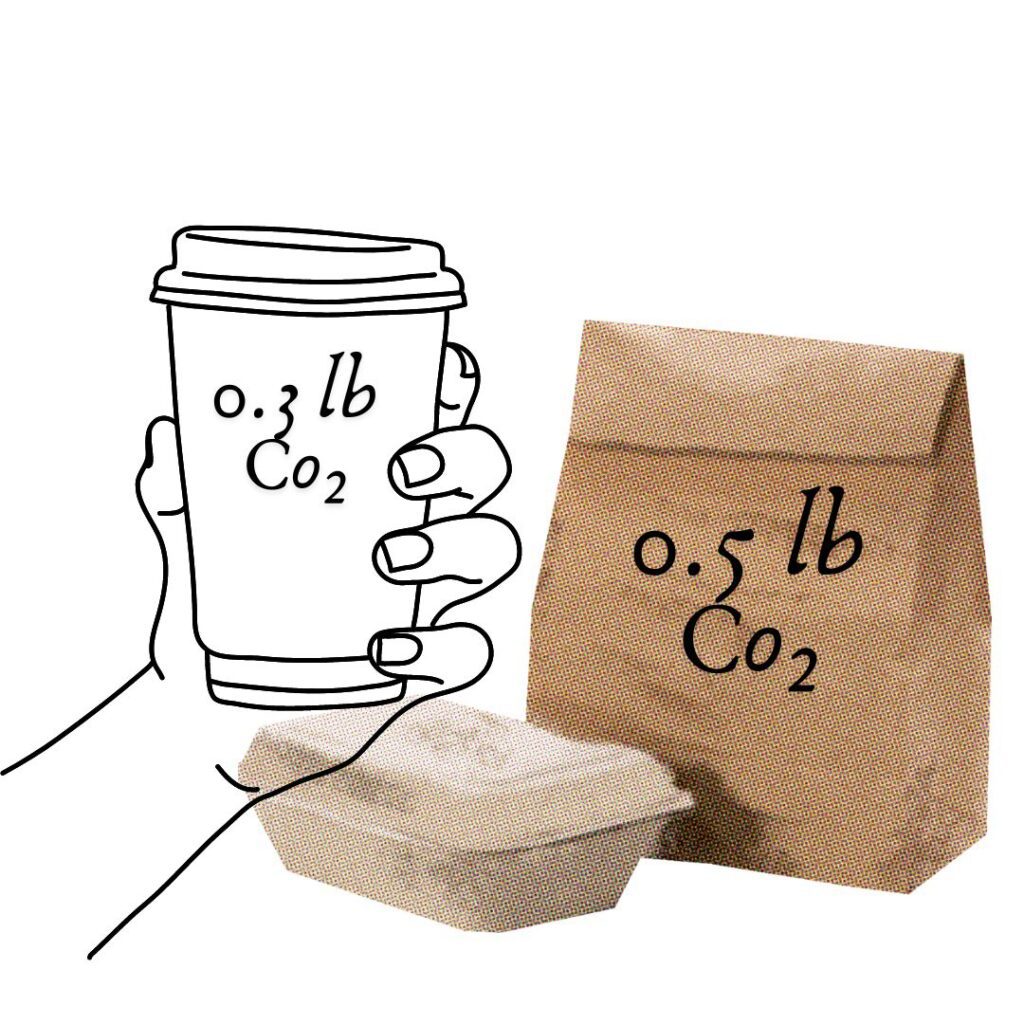
When your business takes steps to reduce wasted food, you’re doing more than improving operations—you’re fostering a sense of responsibility among staff and customers alike.
Reducing wasted food ensures your business complies with New York State’s Food Donation and Food Scraps Recycling law, avoiding penalties, while engaging employees in sustainability efforts strengthens team morale and job satisfaction. By showing your commitment to sustainability, you also attract conscious customers and build lasting loyalty.
FAQs:

We offer customized solutions tailored to your business’s specific needs, including on-site visits, virtual consultations, and ongoing support.
FAQs:
These events offer valuable insights, resources, and strategies to help businesses reduce waste, improve sustainability, and comply with the state’s waste reduction initiatives.
2026 NYS Hauler Roundtable: Building the Next Phase of Organics Diversion in New York State
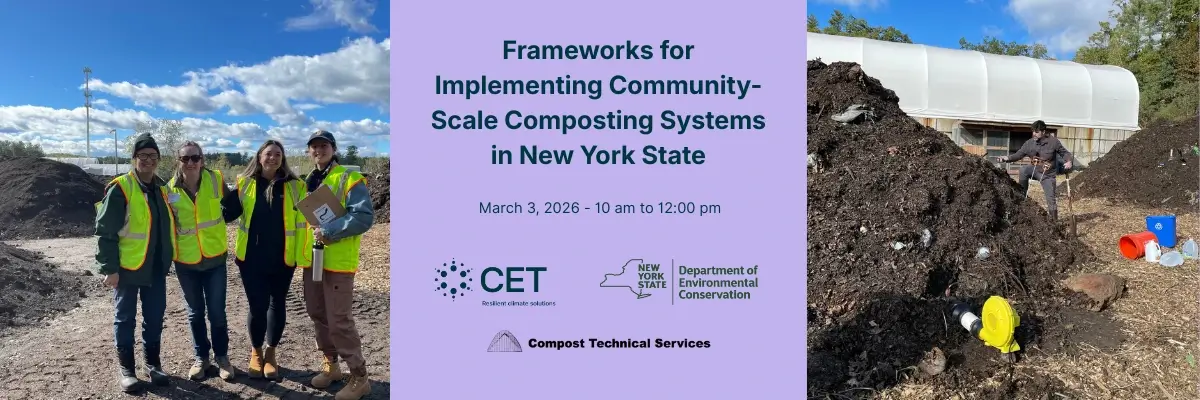
Frameworks for Implementing Community-Scale Composting Systems in New York State
Expanding New York State’s Organics Market
New York State Compost Site Operators Workshop: Schenectady/Schenectady Community Compost Project, Fehr Ave. Farm
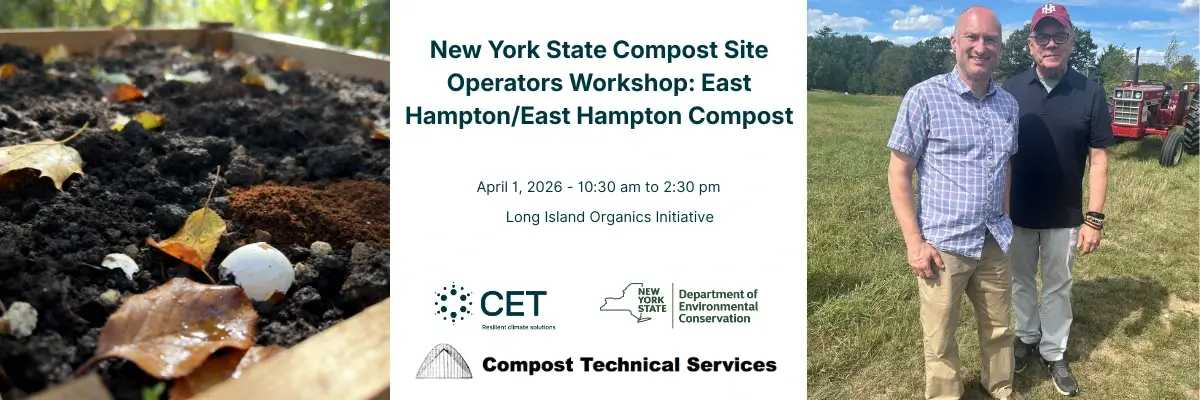
New York State Compost Site Operators Workshop: East Hampton/East Hampton Compost, Long Island Organics Initiative


Real Stories, Real Impact
The results are undeniable. Businesses that partner with CET typically see a 30% reduction in wasted food, translating to stronger community impact. Not only that, but with our no-cost assistance 9 out of 10 businesses experience cost neutrality or cost savings after implementing wasted food solutions.
With CET’s ongoing support, these businesses continue to thrive, showing that sustainable practices aren’t just good for the planet—they’re great for business too. Contact us today to learn how your business can benefit from these sustainable practices.
New York State Compost Site Operators Workshop: East Hampton/East Hampton Compost, Long Island Organics Initiative
Location:Long Island Organics Initiative Date:Mon Apr 1, 2026 Time:10:30 am – 3:00 pm CET, with…
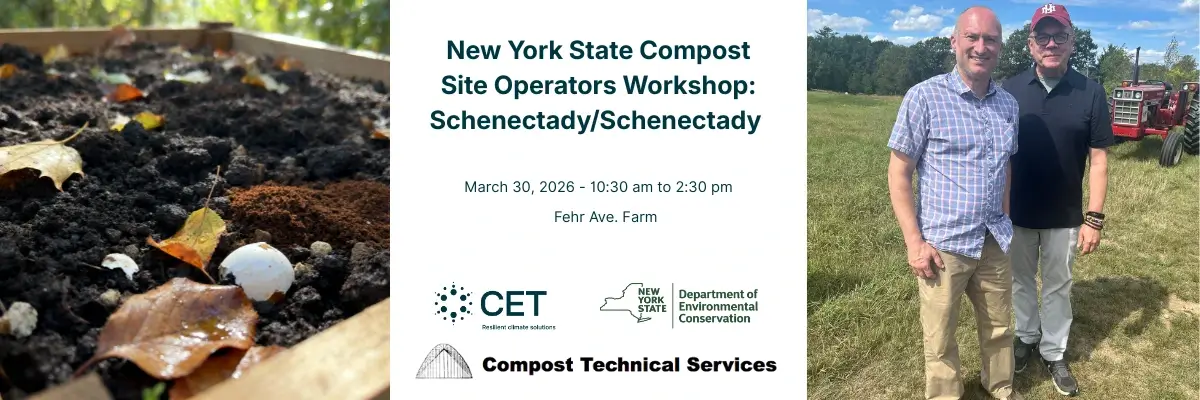
New York State Compost Site Operators Workshop: Schenectady/Schenectady Community Compost Project, Fehr Ave. Farm
Location:Schenectady Urban Farms Date:Mon March 30, 2026 Time:10:30 am – 2:30 pm CET, with support…
Expanding New York State’s Organics Market
Location:Virtual Event Date:Tue March 10, 2026 Time:10:00 am – 11:30 pm Rethink Food Waste New…

Frameworks for Implementing Community-Scale Composting Systems in New York State
Location:Virtual Event Date:Tue March 3, 2026 Time:10:00 am – 12:00 pm CET, with support from NYS DEC, is…